

 Write an Email
 Share
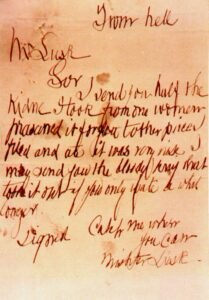
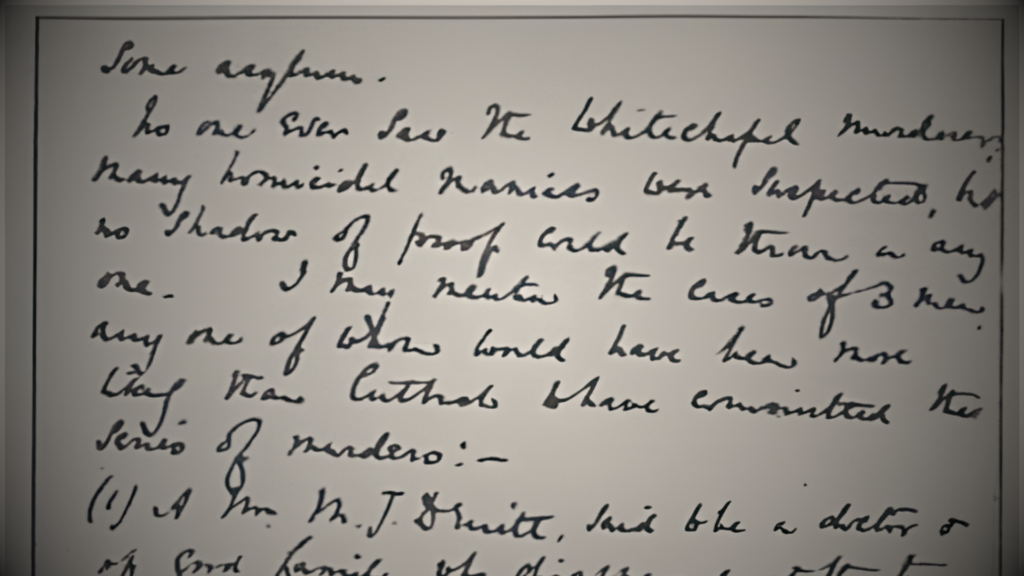
ShareThree suspects appear in actual police documents from the Jack the Ripper investigation. Not the dozens of names proposed by researchers and crime writers across 135 years — three. The Macnaghten Memorandum, a confidential document written in 1894 by Sir Melville Macnaghten of Scotland Yard, named Aaron Kosminski, Montague John Druitt, and Michael Ostrog. Understanding what the police actually had on each of them is the clearest way into why the case was never prosecuted — and why, 135 years later, it has never been resolved.
The Document That Named Three Suspects
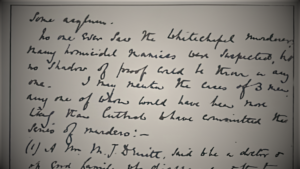
The Macnaghten Memorandum was not written during the active investigation. It was written in 1894, six years after the murders, when a criminal named Neil Cream publicly claimed to be Jack the Ripper before his execution for a different crime. Macnaghten wrote it to refute that claim and to set down what Scotland Yard actually believed.
The document was classified. It was not made public until 1959. When it finally became available, it provided the clearest official statement from within the Metropolitan Police about who investigators considered responsible. The three names it contains are the most defensible starting point for anyone serious about the case — and the primary source the Ripperologist guide works from every night on the Jack the Ripper Tour in Whitechapel.
The Three Suspects Named in the Police Files
Aaron Kosminski: The Strongest Physical Case
Kosminski was a Polish Jewish immigrant born in 1865 who worked as a barber in Whitechapel. He is the only suspect named in both police documents and independent witness accounts. A witness — whose identity has never been conclusively established — is believed to have identified Kosminski at a lineup and then refused to give formal testimony against him. Kosminski was committed to Colney Hatch Lunatic Asylum in 1891, where he died in 1919.
Research published in 2019 in the Journal of Forensic Sciences claimed DNA from a silk shawl allegedly found at the Catherine Eddowes crime scene matched Kosminski’s descendants. The findings are scientifically contested — the Journal of Forensic Sciences subsequently published an Expression of Concern about the paper, and independent geneticists have questioned both the chain of custody of the shawl and the extraction methodology. Ripperologists remain divided on its significance.
Montague John Druitt: The Timing Suspect
Druitt was a barrister and schoolteacher who graduated from Oxford in 1876. His body was found in the River Thames on December 31, 1888: seven weeks after the murder of Mary Jane Kelly, the final canonical victim, on November 9. Macnaghten appears to have believed the murders stopped because the killer had died.
That reasoning rests entirely on timing. No physical evidence connects Druitt to any crime scene. No witness placed him in Whitechapel on any relevant date. He was dismissed from his school position shortly before his death, for reasons that were never disclosed.
Michael Ostrog: The Weakest Case
Ostrog was a Russian-born man with a history of fraud, theft, and institutionalisation. No evidence places him in Whitechapel during the relevant period. Most researchers treat his inclusion in the memorandum as reflecting the police’s broader search for candidates rather than a specific investigative lead.
Why Has No One Been Convicted After 135 Years?
The three suspects share one outcome: none produced enough evidence, in 1888 or since, to support a prosecution. The investigation operated under forensic and institutional constraints that made a case beyond reasonable doubt effectively impossible to build.
What serious Ripperologists continue to debate is not simply which of the three was responsible — most consider Kosminski the strongest candidate — but whether any evidence that exists, or could be discovered, would ever establish more than probability. The methodology used to investigate the case is still evolving, so the case itself remains open, not cold.
Walk the Investigation in Whitechapel Tonight
There is no better way to understand the case than to walk the streets where it happened. Three suspects, one confidential document, and a debate that has never been settled. The Jack the Ripper Tour follows the streets where Kosminski lived and worked, where the investigation unfolded, and where the evidence is still debated today. Join the tour every night at 7:30PM from Altab Ali Park, Whitechapel, and form your own theory. Arrive by 7:15PM. Tickets from €25. Private tours are also available for dedicated researchers. Book at jackrippertour.com.
Frequently Asked Questions
Who are the main Jack the Ripper suspects? Three suspects were named in the Macnaghten Memorandum: Aaron Kosminski, a Polish immigrant barber from Whitechapel; Montague John Druitt, a barrister and schoolteacher found dead in the Thames after the murders stopped; and Michael Ostrog, a Russian-born con man. None were ever charged.
Who is the most likely Jack the Ripper suspect? Among serious Ripperologists, Aaron Kosminski is generally considered the strongest candidate. He is the only suspect named in both police documents and independent witness accounts. Research published in 2019 suggested a possible DNA connection to the Catherine Eddowes crime scene, though these findings remain scientifically contested and the journal subsequently published an Expression of Concern about the paper.
What was the Macnaghten Memorandum? A confidential Scotland Yard document written in 1894 by Sir Melville Macnaghten, then Assistant Chief Constable. It named the three suspects investigators considered most viable and was not made public until 1959.
Why were the suspects never charged? The investigation lacked the forensic tools to build a case beyond reasonable doubt. No physical evidence from any crime scene was definitively linked to a named suspect. The only documented witness identification was never followed through to formal testimony.
Can I learn more about the suspects on the tour? Yes. The Jack the Ripper Tour in Whitechapel is led by a Ripperologist who covers the Macnaghten Memorandum, the evidence for each suspect, and the ongoing debate — in the streets where the investigation actually took place. Nightly at 7:30PM from Altab Ali Park.
 +300 Five-Star Reviews