

 Write an Email
 Share
ShareJack the Ripper was never caught for reasons specific to Whitechapel in the autumn of 1888. The neighbourhood’s geography made surveillance nearly impossible. Victorian forensic science could not reliably identify individuals from crime scene evidence. The witnesses who saw something were, in a neighbourhood with little reason to trust the police, often unwilling to say so. The killer left almost nothing behind. These were structural conditions that no investigation of that period was equipped to overcome.
How Whitechapel’s Geography Shaped the Investigation
Whitechapel in 1888 was one of the most densely populated neighbourhoods in Victorian London — a network of courts, common lodging houses, and back passages that gave the area a layered, labyrinthine quality that street-level maps never fully captured. The crimes happened at night, in areas where gas lighting left large stretches effectively dark, and the layout meant that someone moving quickly through an alley or court could be beyond sight within seconds.
H Division’s investigators understood the area, but understanding it and policing it effectively were different problems. The courts and lodging houses that housed thousands of residents created an environment where witnesses saw only fragments — a figure passing, a sound, a shape in the dark. The density of the population that should have produced more witnesses instead produced more noise, more conflicting accounts, and more uncertainty about what had been seen and from where.
The geography also concentrated the investigation’s attention in ways that may have worked against it. With multiple crime scenes clustered within a relatively small area, the pressure to find a suspect inside that geography was intense — but Whitechapel’s layout made movement through it easy and surveillance of it nearly impossible. The Jack the Ripper Tour departs every night from Altab Ali Park — at the edge of this same geography, where H Division’s jurisdiction began and where the streets the investigation tried to surveil are still walkable today.
What Could Victorian Forensics Actually Prove?
Fingerprint identification would not be adopted by Scotland Yard until 1901. Blood typing did not exist until the same year. DNA analysis was a century away.
What investigators had were wounds, witness statements, and correspondence. The wounds were examined by police surgeons who did not always agree with each other about whether the same person was responsible for each killing. Witness statements were gathered hours or days after events, from people who had their own reasons to keep what they knew to themselves.
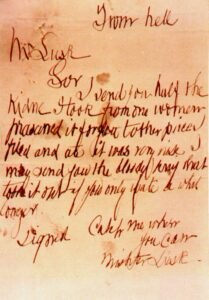
The “Dear Boss” letter — received by the Central News Agency on September 27, 1888 — was the first document to use the name “Jack the Ripper.” Whether it was written by the actual killer or fabricated by a journalist has never been established. If genuine, it is the only direct communication from the perpetrator in the historical record. If not, it introduced a name and persona that may have distorted the investigation’s direction in ways that have never been fully untangled.
The Three Suspects Scotland Yard Never Ruled Out
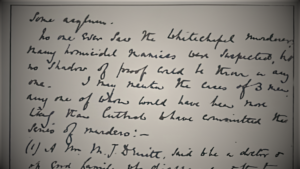
The clearest window into what investigators actually believed is the Macnaghten Memorandum — a confidential document written in 1894 by Sir Melville Macnaghten, then Assistant Chief Constable of the Metropolitan Police. It named three suspects the police considered genuinely viable: Aaron Kosminski, a Polish immigrant barber from Whitechapel — the same streets the Jack the Ripper Tour covers every night; Montague John Druitt, a barrister and schoolteacher whose body was found in the Thames seven weeks after the final canonical murder; and Michael Ostrog, a Russian-born con man.
None were ever charged. The evidence available in 1888 — and in the 135 years since — has never been sufficient to support a prosecution.
Why Do Ripperologists Still Disagree?
The case has not been resolved because the evidence continues to be reinterpreted as new analytical tools become available. The contested DNA evidence on the Eddowes shawl is one example. Ongoing analysis of the letters is another. Researchers working with original Scotland Yard files regularly surface details that the public record has not fully accounted for — and the Ripperologist who leads the Jack the Ripper Tour is among them, bringing that ongoing work directly into the streets where the investigation originally ran.
Among serious Ripperologists, there is broad agreement that the three names in the Macnaghten Memorandum remain the most defensible starting point, and that the investigation of 1888 was operating so far below the threshold required that certainty may never be possible.
Walk the Streets Where the Investigation Failed
The investigation failed because Whitechapel’s geography, the limits of Victorian forensics, and a killer who left almost nothing behind made it structurally impossible to solve. The streets where that failure happened are still there. The Jack the Ripper Tour walks them every night at 7:30PM from St Mary’s Whitechapel Church Memorial in Altab Ali Park, East London, led by a Ripperologist who has spent years with the primary case files. Arrive at 7:15PM. Tickets from €25. Private sessions available for serious researchers. Book at jackrippertour.com.
Frequently Asked Question
Why was Jack the Ripper never caught? Several factors converged: Whitechapel’s geography made visibility and surveillance nearly impossible, Victorian forensic science could not reliably identify individuals from crime scene evidence, witnesses were often unwilling to cooperate, and the killer left almost nothing behind. The investigation was not equipped — by the standards of its time — to solve a case of this nature.
Who were the main Jack the Ripper suspects? The Macnaghten Memorandum of 1894 named three: Aaron Kosminski, a Polish immigrant barber from Whitechapel; Montague John Druitt, a barrister and schoolteacher found dead in the Thames after the murders stopped; and Michael Ostrog, a Russian-born con man. None were ever charged.
What was the Macnaghten Memorandum? A confidential Scotland Yard document written in 1894 by Sir Melville Macnaghten, then Assistant Chief Constable. It named the three suspects investigators considered most viable and was not made public until 1959. It remains the most authoritative internal police statement on the case.
What was the “Dear Boss” letter? A letter received by the Central News Agency on September 27, 1888 and the first document to use the name “Jack the Ripper.” Whether it was written by the actual killer or fabricated by a journalist has never been definitively established.
Can you walk the Jack the Ripper streets in Whitechapel today? Yes. Several of the streets and locations from the 1888 investigation still exist. The Jack the Ripper Tour visits actual crime scene locations every night at 7:30PM from Altab Ali Park, guided by a Ripperologist who places each stop within the full context of the case.
 +300 Five-Star Reviews